


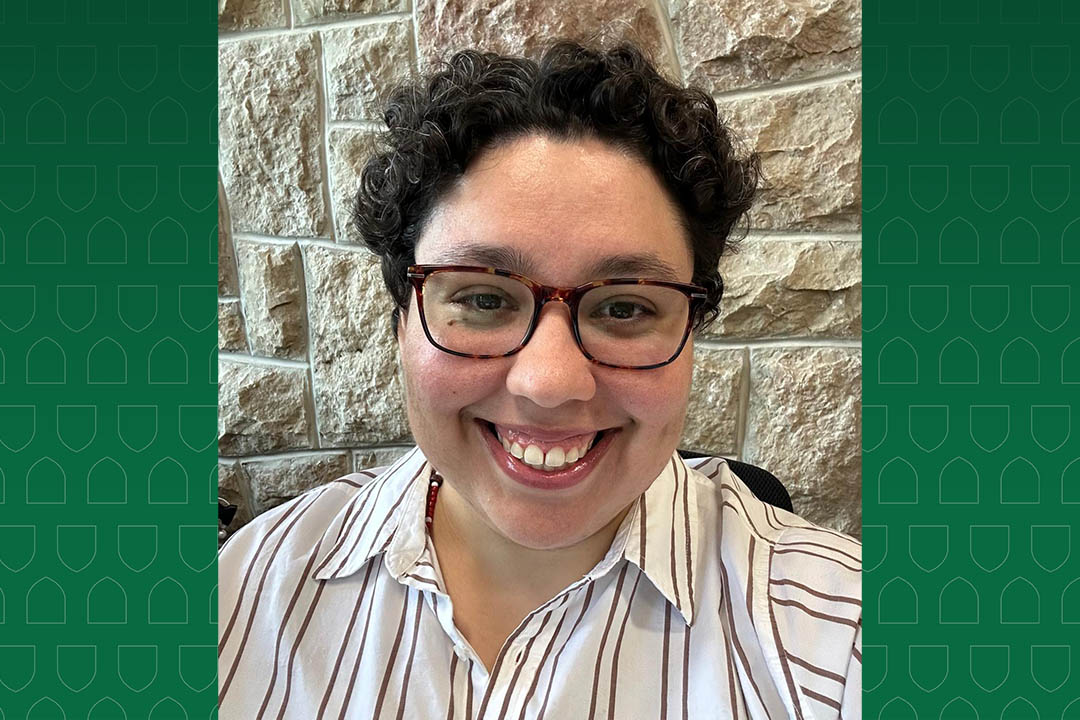
Despite her passion for education, Sampaio struggled to achieve the grades needed to become a certified educator during her undergraduate studies at Universidade Salvador. At one point, she considered dropping out.
“In my first term as an education major, I got a really bad grade on an essay,” she said. “I felt so defeated and thought about choosing another career. Thankfully, one of my teachers, Ana Jacy Calasans, said, ‘We’re going to make this work.’ Ana Jacy spent a great deal of time and energy trying to find other ways to assess my knowledge.”
Traditional methods such as multiple-choice tests didn’t reflect her understanding. But when she was allowed to demonstrate her knowledge through alternative assessments, her grades improved. She graduated summa cum laude with a 97 per cent average and several academic awards.
“I really knew the content,” she said. “It was the strategy and instrument of assessment that didn’t connect with me.”
Her dedication to education deepened after receiving the autism and attention deficit hyperactivity disorder (ADHD) diagnosis by health professionals.
“I didn’t know much about autism or ADHD, but I’ve always known I was different and responded differently to education and learning,” she said. “My brain needs very clear and objective instructions. After the diagnosis, I felt a strong urge to do something so other students wouldn’t have it as hard as I did.”
That drive led her to found the Neurodiversity and Inclusive Education Academic League at Universidade Salvador. The initiative promotes academic and professional growth in inclusive education, with a focus on neurodiversity approaches for students and teachers.
“I founded the academic league so we could host events and talk about diversity, and how we can adapt our teaching and learning strategies to meet diverse needs and create more inclusive classrooms,” she said.
To help change how teacher candidates are trained, Sampaio pursued a master’s degree in educational administration at USask.
She was drawn to the university by its strong academic program, supportive community and commitment to international students. But it was the warmth of the faculty and staff that sealed the deal.
“I searched the profiles of the professors in the Department of Educational Administration,” she said. “They all had impressive CVs and experience in supervising students, conducting research and publishing. Lastly, I looked at their pictures and they all had really kind eyes — even Katrina Hutchence and Jennifer Kovar from the department’s support staff. I wanted to come to a place where I could find kindness, because that’s how I conduct myself in life.”
Her thesis, Neurodiversity on Campus: University Instructors’ Experiences Working with Neurodivergent Students, explores how post-secondary educators support neurodivergent learners. With neurodiversity in higher education still a relatively new and underexplored field, she hopes her research will help future students feel more comfortable and supported.
“We know that students feel undersupported,” she said. “They feel they have to choose between being seen as valid and capable, or disclosing their diagnosis and potentially being perceived through stigmatized views. This hinders their academic experience and outcomes. There are added layers of stress and struggle for people with diverse learning needs in higher education.”
Sampaio will officially graduate at USask’s Fall Convocation, but she has already begun her PhD studies to continue her research. Her ultimate goal is to grow the community and strengthen society.
“This is what I want to do — I want to teach at the post-secondary level,” she said. “I want to support future teacher candidates, talk about inclusive education, be part of their growth and grow with them.”
She encourages other international students to study hard and make the most of their time at USask.
“If this is what you really want to do, hit the books hard,” Sampaio said. “There’s a lot to learn and engage in at USask. Enjoy it to the fullest.”
While studying abroad can be challenging, she reminds international students to stay connected to their roots.
“Don’t lose the sparkle and everything you brought with you,” she said. “We’re really far from home, so it’s easy to feel disconnected from our culture and identity. But this is what gives me life. It gives character to my identity and how I approach my career and every learning and teaching opportunity I have.”
With her vibrant personality and unwavering commitment, Sampaio is helping build a more inclusive learning environment for neurodivergent students — and opening doors for international learners to thrive.
link