BOTTOM Shelbyville’s first Montessori School to open soon | Sentinel News
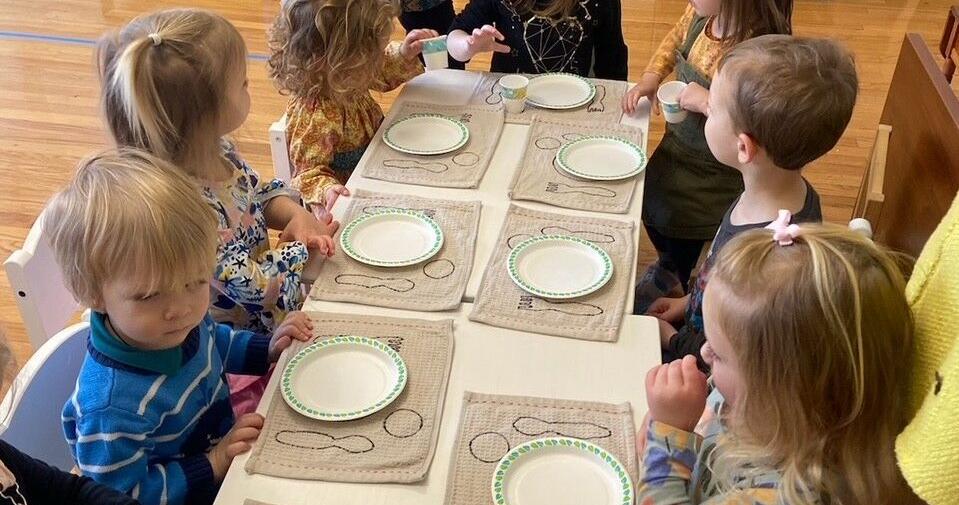
Montessori education is defined as “a system of education for young children that seeks to develop natural interests and activities rather than use formal teaching methods.”
The education practice involves hands-on learning through activities that surround real-world tasks. Shelbyville resident Leslie Genuis will soon be bridging the Montessori curriculum to the community with the opening of Shelbyville’s first Montessori school, Good Shepherd Montessori Center.
Genuis started her journey with education as she earned a BA with a double major in French and Theology and a High School Teaching Degree, and later returned to study for a BA in Elementary French Immersion Education in Canada, where she taught for several years before moving to the United States with her husband and family.
As an educator for over 20 years, Genuis knew of the Montessori methods but was not familiar with them in any way. During her career as an educator, she was asked to consult with a school on the verge of shutting down and research ways she could help. She discovered that changing to Montessori methods, especially for preschool-aged children and lower grades, had made a significant impact on the students and schools as a whole.
“When I discovered the Montessori Methodology and found that not only did it align with my life philosophy, but was even more intentional about what and how to educate children than what I had previously known,” Genuis said.
Once she had realized the effectiveness of the Montessori methodology, Genius began down the path to get certified to teach it.
Over the past decade, she has focused exclusively on the Montessori method, becoming certified in both the three-to-six-year-old and infant/toddler programs.
“Throughout this time, I took all levels of the Montessori Catechism, called the Catechesis of the Good Shepherd. This training was true to the Montessori Method and contains many elements of the regular Montessori Method, such as Grace and Courtesy, Art, Sensorial, Practical Life, Geography (as it pertains to the life of Christ), and of course, Bible and Liturgy,” said Genuis.
Genuis explained that the full Montessori curriculum includes core subjects like math and language arts, but also includes a more extensive cultural study and sensorial activities.
“The outcome is clear, that they are to learn about the external life, and internal life of charity towards others, hope, generosity, kindness, forgiveness in a method that encourages these wonderful concepts into their bones,” said Genuis.
Genuis is starting her school because she believes in the benefits of the program and has seen the strengths of both traditional and non-traditional educational strategies.
“What I have experienced after learning and working with different methods, I can say with confidence that the Montessori method has been more intentional with a clearly defined prepared environment, materials, and teacher training,” said Genuis. “It has helped me parent and teach better with more confidence, knowing how and why I prepare my lessons, materials, environment, and teach my students.”
Throughout all her experience working in different types of schools, Genuis has seen one significant difference that was stronger in the Montessori method.
“A great love of learning and respect of environment self and others, independence and initiative, greater skills in socialization, profound concentration, spontaneous self-discipline, the power to act from real choices and not from mere curiosity, and above all joy. Yes, I observed these characteristics in even as young as our three-year-old preschoolers,” said Genuis.
Genuis explains that Montessori is not only beneficial for young people, but it continues to have benefits as Montessori students grow older and enter different education settings.
She explained that she has encountered peers who were involved in Montessori education early in their lives and have spoken of the long-term benefits, especially the multi-age group structure of the Montessori program.
“The Level I has children 3-6 years of age. Younger children learn from their classmates, and older children mentor the younger ones. In this multi-age setting, they learn empathy, patience, and good communication skills. They also acquired cooperation, good conflict resolution, and interpersonal respect. These are skills that they found beneficial in both their personal and professional spheres later in life,” said Genuis.
Genuis dispelled the myth that the Montessori method encourages children to play with little guidance. Instead, she focuses on lessons that help develop and refine lifelong skills through a rich tapestry of activities. She explained that at the beginning of the year, she starts lessons on “Grace and Courtesy,” where the smaller children practice greeting each other, listening in on conversations without interrupting, politely interrupting, and conflict resolution.
Genuis stated that a three-hour work period is the essential structure in all Montessori environments and that during these periods, children receive one-on-one lessons or practice lessons that they have been working on.
Genuis explained that each lesson covers the whole span of the curriculum, encompassing language arts, math, sensorial, geography, botany, art, and practical life work in every activity.
Each day, Montessori teachers keep track of which child has received which lessons, which they are continuing to work on, and what they have mastered.
Other parts of the schedule may look fairly traditional from the outside, including lunch, recess, nap time, a second work period, and departure; however, Genuis explains that every part of the day is used as an intentional teaching moment.
“For example, the lunch and snack are not just about eating but a great opportunity to foster patience, empathy, community living, coordination, and self-care as they learn to wash up on their own and serve up their own healthy snack. They also learn to set the table for lunch and clear it, as well as washing dishes. Again, skills they will learn for life,” said Genuis.
Genuis acknowledges that while all educational methods have their strengths, Montessori is a top choice for parents wanting a different environment for their children.
“If you value an individualized approach that encourages self-motivated growth in all areas of development, a strong sense of curiosity, concentration, confidence, collaboration, and independence from an early age that results in long-term positive outcomes on students’ success, then the Montessori Method is for you.”
An open house for the Good Shepherd Montesorri Center will be announced soon and the public will be invited to attend.
For those unable to attend or want more information contact:
Good Shepherd Montessori Center
Administrator: Leslie Genuis
502-303-4499
link