Innovation of entrepreneurship education in auxiliary instruction system for college aesthetic course teaching under BPNN model
IEE
IEE is an educational model designed to cultivate students’ innovative awareness, entrepreneurial competence, and comprehensive capabilities. It emphasizes the integration of theoretical knowledge and practical application, while promoting individual development and creative potential9. In music-focused higher education institutions, IEE extends beyond the transmission of professional knowledge to the holistic development of students’ abilities in artistic creation, project planning, market orientation, and entrepreneurial practice10,11. Integrating IEE into aesthetic education courses facilitates a more effective alignment between artistic training and innovation development. For instance, project-based instruction can guide students in planning and presenting original music works; data analytics and intelligent systems can support multidimensional assessments of the creative process and performance; and simulated entrepreneurship platforms can enable students to understand the commercialization pathways of musical products. These methods help foster student initiative and enhance problem-solving abilities. Furthermore, IEE systems can be embedded into AI-assisted instructional platforms to provide personalized learning recommendations and dynamic competence assessments. Such integration helps guide students to continuously refine their creative thinking and entrepreneurial strategies, while improving their practical skills and adaptability12. As a result, IEE introduces new directions for art education and provides both technical infrastructure and theoretical support for improving the quality of entrepreneurship education in higher education13.
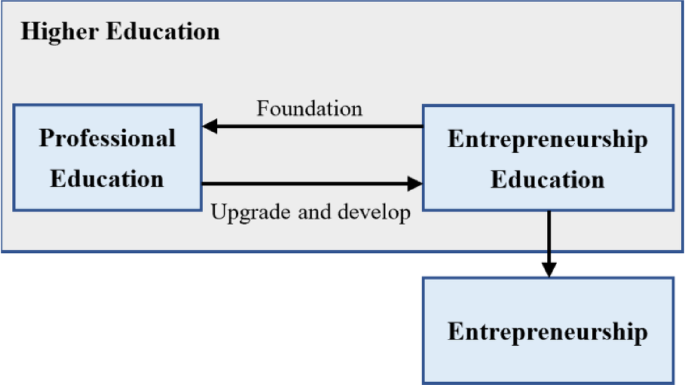
Figure 1 illustrates the relationship between professional education and the IEE framework.

The relationship between IEE and professional education.
The distinction between IEE and traditional professional education can be understood through several core features:
-
1.
Integration, which incorporates diverse social, industrial, and practical elements into higher education, forming a cohesive system that evolves with societal progress.
-
2.
Timeliness, as IEE aligns with current social and economic trends, enabling graduates who receive entrepreneurship training alongside professional education to access enhanced career opportunities.
-
3.
Transformational impact, where the skills fostered through IEE—such as creativity, initiative, and risk tolerance—contribute not only to professional development but also to personal growth, exceeding the scope of conventional disciplinary training14,15,16.
BPNN is a widely used type of artificial neural network that operates by iteratively adjusting network weights and thresholds through the backpropagation algorithm. This process enables the network to optimize its internal parameters and achieve accurate classification or prediction results. In the context of educational support systems, BPNN has been effectively applied to personalized instruction and the assessment of students’ learning performance. Within music composition education, BPNN can be used to classify and evaluate students’ creative outputs, thereby offering targeted instructional recommendations17. In entrepreneurship education, BPNN can analyze students’ entrepreneurial competence and potential, support individualized entrepreneurship training, and perform adaptive evaluations. By continuously updating its parameters based on feedback, the model contributes to improved instructional effectiveness. As a result, BPNN plays a critical role in enhancing the precision and adaptability of AI-assisted instructional systems. It enables educators to gain deeper insights into students’ learning behaviors and instructional needs, ultimately supporting the delivery of personalized educational services. When implementing AI- and deep learning-based support systems in music entrepreneurship education, the integration of BPNN with IEE frameworks significantly enhances system intelligence and instructional effectiveness. This approach also provides a pathway for the innovation and development of entrepreneurship education practices in art-focused academic contexts18,19,20.
Research and analysis of the BPNN model
A BPNN consists of multiple layers of neurons, including one or more hidden layers positioned between the input and output layers. Although neurons within the hidden layers do not directly interact with the external environment, changes in their activation states significantly influence the relationship between inputs and outputs4. Each layer may contain numerous nodes, and the overall structure is designed to accommodate complex computational processes. Since its initial development in 1986, BPNN has undergone continuous improvements in both theoretical foundations and performance. Its primary advantages include a strong nonlinear mapping capability and a highly flexible network architecture. Drawing on the characteristics and principles of mathematical functions, BPNN is capable of learning from complex data samples and is particularly effective in modeling nonlinear relationships21,22,23. The network’s adaptive, self-organizing, and self-learning features enable it to conduct scientific analyses of complex problems and to identify efficient strategies for solving them24,25. The topological structure of the BPNN model is illustrated in Fig. 2.

Topology of the BPNN model.
The BPNN architecture comprises an input layer, one or more hidden layers, and an output layer. Neurons within the same layer are not interconnected; connections are only established between adjacent layers. The network is capable of generating diverse outputs based on varying inputs, thereby satisfying the requirements of the training dataset26,27,28. Let the input vector be defined as \(\:x={\left({x}_{1},{x}_{2},\dots\:\cdots\:,{x}_{i},\cdots\:\cdots\:,{x}_{n}\right)}^{T}\), the output vector of the hidden layer as \(\:y={\left({y}_{1},{y}_{2},\dots\:\dots\:{y}_{i},\cdots\:\cdots\:\cdot\:{y}_{m}\right)}^{T}\), and the output vector of the output layer as \(\:O={\left({O}_{1},{O}_{2},\dots\:\dots\:,{O}_{k},\dots\:\dots\:,{O}_{l}\right)}^{T}\).The weight matrix between the input and hidden layers is \(\:v={\left({v}_{1},{v}_{2},\dots\:\dots\:{v}_{k},\cdots\:\cdots\:\cdot\:{v}_{m}\right)}^{T}\),and the weight matrix between the hidden and output layers is \(\:w={\left({w}_{1},{w}_{2},\dots\:\dots\:{w}_{j},\cdots\:\cdots\:\cdot\:{w}_{l}\right)}^{T}\).The output of the output layer is defined as Eq. (1):
$$\:{O}_{k}=f\left(\sum\:_{j=0}^{m}\:{w}_{jk}{y}_{j}\right)\:\:k=\text{1,2},\dots\:\dots\:,n$$
(1)
The hidden layer activation is defined as Eq. (2):
$$\:{y}_{j}=f\left(\sum\:_{i=0}^{m}\:j{v}_{ij}{x}_{i}\right)\:\:j=\text{1,2},\dots\:\dots\:,m$$
(2)
In general, the activation function applied between the hidden and output layers is the sigmoid function, which has two common variants: the log-sigmoid function and the tan-sigmoid function29. These are defined respectively as Eq. (3):
$$\:f\left(x\right)=\frac{1}{1+{e}^{-x}}$$
(3)
$$\:f\left(x\right)=\frac{1-{e}^{-x}}{1+{e}^{-x}}$$
(4)
The sigmoid function is the most frequently used activation function in BPNN. It compresses the output of the previous layer into a bounded range, thereby enabling the network to realize nonlinear mappings from input to output. This property is essential for solving complex classification and regression tasks in educational systems30,31,32.
Compared with other machine learning models, the BPNN demonstrates distinct advantages in handling nonlinear, multidimensional, and fuzzy-boundary educational evaluation data. First, BPNN can capture complex interactions among students’ ability indicators through its multilayer neural structure. This capability is particularly important in music-related courses, where entrepreneurial competence is closely linked to aesthetic literacy, originality, and interdisciplinary collaboration. These traits are often highly nonlinear and subjective in nature. Second, BPNN possesses adaptive learning capabilities. It continuously optimizes its parameters through backpropagation, allowing it to adjust to the unique characteristics of individual students. Compared with models such as Support Vector Machines (SVM) and Random Forests, BPNN offers greater flexibility in processing continuous output variables (e.g., ability scores). It also better accommodates variations in feature dimensions and importance, thereby enhancing the model’s generalization ability and stability.
BPNN training and optimization process
The training of a BPNN involves a systematic algorithmic approach designed to iteratively optimize the weights and thresholds of the network to improve classification or prediction performance. The detailed training process consists of the following steps:
Step 1: Initialization of variables and parameters.
Let the input vector be defined as \(\:{x}_{k}=\left[{x}_{k1},{x}_{k2},\dots\:\dots\:,{x}_{km}\right]\), where \(\:k=\text{1,2},3,\dots\:\dots\:n\), and \(\:n\) represents the total number of training samples. After n iterations, the weight matrices connecting various network layers are denoted as follows:
The weight matrix between the input layer \(\:M\) and the first hidden layer \(\:I\) is given by Eq. (5):
$$\:{w}_{MI}\left(n\right)=\left[\begin{array}{cccc}{w}_{11}\left(n\right)&\:{w}_{12}\left(n\right)&\:..&\:{w}_{1I}\left(n\right)\\\:{w}_{21}\left(n\right)&\:{w}_{22}\left(n\right)&\:..&\:{w}_{2I}\left(n\right)\\\::&\::&\::&\::\\\:{w}_{M1}\left(n\right)&\:{w}_{M2}\left(n\right)&\:..&\:{w}_{MI}\left(n\right)\end{array}\right]$$
(5)
The weight matrix between hidden layers \(\:I\) and \(\:J\) is:
$$\:{w}_{IJ}\left(n\right)=\left[\begin{array}{cccc}{w}_{11}\left(n\right)&\:{w}_{12}\left(n\right)&\:..&\:{w}_{1J}\left(n\right)\\\:{w}_{21}\left(n\right)&\:{w}_{22}\left(n\right)&\:..&\:{w}_{2J}\left(n\right)\\\::&\::&\::&\::\\\:{w}_{I1}\left(n\right)&\:{w}_{I2}\left(n\right)&\:..&\:{w}_{IJ}\left(n\right)\end{array}\right]$$
(6)
The weight matrix between the hidden layer \(\:J\) and the output layer \(\:P\) is:
$$\:{w}_{JP}\left(n\right)=\left[\begin{array}{cccc}{w}_{11}\left(n\right)&\:{w}_{12}\left(n\right)&\:..&\:{w}_{1P}\left(n\right)\\\:{w}_{21}\left(n\right)&\:{w}_{22}\left(n\right)&\:..&\:{w}_{2P}\left(n\right)\\\::&\::&\::&\::\\\:{w}_{J1}\left(n\right)&\:{w}_{J2}\left(n\right)&\:..&\:{w}_{JP}\left(n\right)\end{array}\right]$$
(7)
The predicted output after the \(\:n\)-th iteration is \(\:{y}_{k}\left(n\right)=\left[{y}_{k1}\left(n\right),{y}_{k2}\left(n\right),\dots\:\dots\:,{y}_{kn}\left(n\right)\right]\), and the expected output is \(\:{d}_{k}=\left[{d}_{k1}{d}_{k2},\dots\:\dots\:,{d}_{k3}\right]\), where \(\:k=\text{1,2},3\dots\:\dots\:n\). These values are derived from the labeled dataset used for model training.
Step 2: Network initialization.
The weights \(\:{w}_{MI}\left(n\right)\), \(\:{w}_{IJ}\left(n\right)\), and \(\:{w}_{JP}\left(n\right)\) are initialized with non-zero random values, and the iteration counter is set to \(\:n=0\). This step ensures that the model has the capacity to learn and begin the iterative optimization process.
Step 3: Sample input.
Each training sample \(\:{x}_{k}\). is input into the network. The dimensionality of the sample vector corresponds to the number of neurons in the input layer, serving as the foundation for pattern recognition and weight adjustments during training.
Step 4: Forward propagation.
The relationship between hidden and output layers is calculated as Eq. (8):
$$\:{\mathcal{V}}_{p}\left(np\right)={y}_{kp}\left(n\right),\:\:p=\text{1,2},\dots\:\dots\:p$$
(8)
Step 5: Error computation.
The output error \(\:E\left(n\right)\) is calculated based on the difference between \(\:{d}_{k}\) and \(\:{y}_{k}\left(n\right)\). If the error meets the predefined threshold, the training proceeds to Step 8. Otherwise, the process continues to Step 6.
Step 6: Backpropagation.
This step is the core of the learning process. The network compares the current error with the previous iteration33. If the error increases, training terminates; otherwise, the neuron’s local gradient \(\:\delta\:\) is calculated as Eq. (9):
$$\:{\delta\:}_{p}^{p}\left(n\right)={y}_{p}^{\left(n\right)}(1-{y}_{p}^{\left(n\right)})({d}_{p}^{\left(n\right)}-{y}_{p}^{\left(n\right)})$$
(9)
Step 7: Weight Update.
Weights are adjusted based on the gradients and learning rate \(\:\eta\:\). The update formulas incorporate a momentum term to prevent oscillations and improve convergence stability:
$$\:\left\{\begin{array}{c}{{\Delta\:}}_{{w}_{jp}}\left(n\right)=\eta\:{\delta\:}_{p}^{P}\left(n\right){\nu\:}_{j}^{J}\left(n\right),j=\text{1,2},3\dots\:\dots\:J\\\:{w}_{jp}\left(n+1\right)={\mathcal{W}}_{jp}\left(n\right)+{{\Delta\:}}_{{w}_{jp}}\left(n\right),p=\text{1,2},\dots\:\dots\:p\\\:{{\Delta\:}}_{{W}_{ij}}\left(n\right)=\eta\:{\delta\:}_{j}^{J}\left(n\right){\mathcal{V}}_{i}^{I}\left(n\right),i=\text{1,2},\dots\:\dots\:I\\\:{w}_{ij}\left(n+1\right)={w}_{ij}\left(n\right)+{{\Delta\:}}_{{w}_{ij}}\left(n\right),j=\text{1,2},3\dots\:\dots\:J\end{array}\right.$$
(10)
Step 8: Training Completion Check.
If all samples have been processed and error convergence criteria are met, training ends. Otherwise, return to Step 3.
Despite its effectiveness, BPNN presents several limitations:
-
1.
Slow convergence of the total error during training34.
-
2.
Prone to local minima, which can hinder global optimization35.
-
3.
Catastrophic forgetting, where new data learning causes loss of previously learned patterns36.
To address these issues, several optimization strategies are implemented:
-
(1)
Momentum Term Introduction:
A momentum coefficient: The learning rate \(\:\alpha\:\) is added to improve convergence behavior:
$$\:{\Delta\:}{w}_{ij}\left(n\right)=\alpha\:{\Delta\:}{w}_{ij}(n-1)+\eta\:{\delta\:}_{j}\left(n\right){\mathcal{V}}_{i}\left(n\right)$$
(11)
Equation (11) generalizes to:
$$\:{{\Delta\:}}_{{W}_{ij}}\left(n\right)=\eta\:\sum\:_{t=0}^{n}\:{a}^{n-t}{\delta\:}_{j}\left(t\right){\mathcal{V}}_{i}\left(t\right)$$
(12)
-
(2)
Adaptive Learning Rate:
The learning rate η is dynamically adjusted to control error reduction. When the overall error decreases after weight adjustment, a decay factor \(\:(\theta\:<1)\) is applied so that \(\:\eta\:=\theta\:\eta\:\).
-
(3)
Modified Activation Function:
To accelerate convergence, a hyperbolic tangent function is adopted:
$$\:f\left(u\right)=atanh\left(bu\right)=a\left[\frac{1-exp(-bu)}{1+exp(-bu)}\right]=\frac{2a}{1+exp(-bu)}-a$$
(13)
This study adopts a questionnaire survey (QS) approach from the perspective of aesthetic education to identify student characteristics and needs, thereby delivering personalized entrepreneurial education services. Empirical analysis is used to validate research hypotheses and inform educational recommendations. Additionally, PCA is employed to extract latent factors that significantly influence students’ acceptance of the instructional system.

Optimized model framework for BPNN-IEE integration.
The optimized model framework, illustrated in Fig. 3, integrates BPNN with the IEE evaluation system and incorporates data from music composition and entrepreneurial training. It enables adaptive, personalized feedback for students by assessing their creative competence, entrepreneurial awareness, and aesthetic literacy. This approach provides precise evaluation and targeted guidance, thereby enhancing both music composition and entrepreneurship instruction.
Analysis and construction of the college music major’s aesthetic course-oriented IEE evaluation index system
This study selects undergraduate music majors from A Music College as the target population. The pilot study was conducted from March 1 to March 5, 2024, with a total of 30 senior music students participating. Expert consultations were carried out in two rounds, on March 10 and March 17, 2024, involving three university-level IEE mentors, two music education scholars, and one entrepreneurship mentor. Feedback from these consultations was used to further refine the questionnaire design. The formal questionnaire was administered from April 1 to April 15, 2024, through both online and offline channels. A total of 473 questionnaires were distributed, and 444 valid responses were collected, yielding an effective response rate of 93.9%. During the survey process, all respondents’ personal information was strictly protected. Participants signed informed consent forms prior to completing the questionnaire, explicitly stating that their data would be used solely for academic research and handled anonymously. All questionnaire data were encrypted to prevent unauthorized access. Identifying information, such as names and student numbers, was not linked to survey responses, ensuring full privacy protection. All data processing and analysis were conducted in accordance with relevant ethical research guidelines, ensuring compliance with research ethics standards.
Before training the BPNN model, the collected questionnaire data underwent preprocessing. Quantitative data were standardized, and qualitative variables were converted using one-hot encoding. The QS responses captured students’ self-assessments and practical experiences in both music composition and entrepreneurship education. These data enabled the BPNN to learn the individual characteristics and needs of each student and to personalize instructional strategies accordingly. For instance, if a student’s responses indicated low entrepreneurial awareness, the model could recommend increased exposure to entrepreneurship-related learning materials and tailored instructional modules.
The QS was administered through both online and offline channels, employing a mixed sampling approach that combined convenience sampling and random sampling methods. Among the 444 respondents, 143 were male (32.2%) and 301 were female (67.8%).
Prior to formal deployment, a draft version of the questionnaire was developed and reviewed by professional music educators and entrepreneurship instructors to ensure conceptual alignment and clarity. Irrelevant or ambiguous items were eliminated. Subsequently, the revised version was validated by subject-matter experts in education and entrepreneurship to further refine the questionnaire’s design. The finalized instrument includes twelve items of basic information, with the full content presented in the appendix. Structurally, the questionnaire follows a three-part format: an introductory statement, the main body, and a concluding section. The introduction outlines the study’s objectives, the target participant group, and the intended use of the data, thereby fostering understanding and engagement. The main body is organized into three sections: (1) basic demographic and academic information, (2) core competency assessment, and (3) open-ended feedback. The core competency assessment is based on four primary dimensions: foundational competence, professional competence, practical competence, and extended competence. Each primary dimension is further divided into three secondary indicators. The study conducted a comprehensive review of relevant domestic and international literature, analyzing a total of 70 publications on the integration of IEE with music education. Based on this review, 23 core studies were selected, from which key variables related to entrepreneurial competence were extracted. The concluding section thanks the participants and affirms that all responses are anonymized and used solely for academic purposes in accordance with ethical research guidelines. The questionnaire employs four types of items: single-choice questions (for background information), graded quantitative items (for evaluating achievements such as certifications and competition awards), binary yes/no questions (for identifying participation in entrepreneurial activities), and open-ended questions (for collecting suggestions on integrating aesthetic education with entrepreneurship education). These open-ended responses also serve as supplementary explanatory variables for subsequent modeling. To ensure the BPNN model could effectively process the data, a unified quantitative scoring mechanism was established. For instance, in the “Patent Ownership” item, responses were encoded as 1 for “Yes” and 0 for “No.” In the “Award Level” item, first, second, third prizes, and no award were assigned scores of 3, 2, 1, and 0, respectively. Scores for secondary indicators were calculated by aggregating item-level scores, and the resulting vectors were used as input features for BPNN training. This scoring scheme ensures a balance between interpretability and computational suitability.
To assess the internal consistency of the QS, Cronbach’s alpha coefficient was used—a standard and widely accepted method for measuring reliability in the social sciences. A threshold of 0.7 is commonly accepted as the minimum for adequate reliability37. The analysis results showed that all reliability coefficients exceeded 0.7, indicating that the questionnaire possesses high internal consistency and robust reliability. The detailed reliability analysis is presented in Fig. 4:
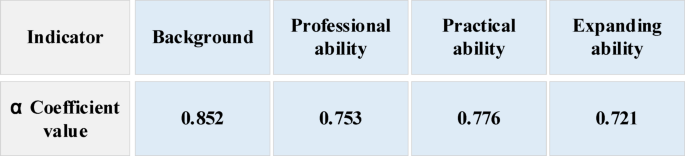
Reliability analysis of the QS.
Statistical Product and Service Solutions (SPSS) 25.0 is a statistical analysis software widely used across disciplines for data processing and interpretation. In this study, SPSS 25.0 is employed to perform basic statistical computations such as means, standard deviations, and correlation coefficients. It also facilitates hypothesis testing, multiple regression analysis, and examination of relationships among key variables to determine the influence of various factors on IEE. Moreover, SPSS’s reporting and visualization functions enhance the clarity and communicability of empirical findings. In particular, the Kaiser-Meyer-Olkin (KMO) measure is used to assess the sampling adequacy for principal component or factor analysis. The KMO statistic ranges from 0 to 1, with higher values indicating stronger inter-variable correlations, which are desirable for factor analysis. Typically, a KMO value above 0.5 is considered acceptable, whereas values below 0.5 suggest poor suitability, warranting alternative analytical methods. In the present study, SPSS 25.0 is used to conduct a validity analysis of the questionnaire data. The results show that all KMO values exceed 0.5, and the significance levels are below 0.01, confirming statistical robustness. Additionally, the factor loadings indicate that each variable contributes adequately, and the explanatory power of each factor exceeds 60%, suggesting that each survey item is well-differentiated and the overall structure satisfies psychometric criteria. The detailed validity analysis results are presented in Fig. 5.
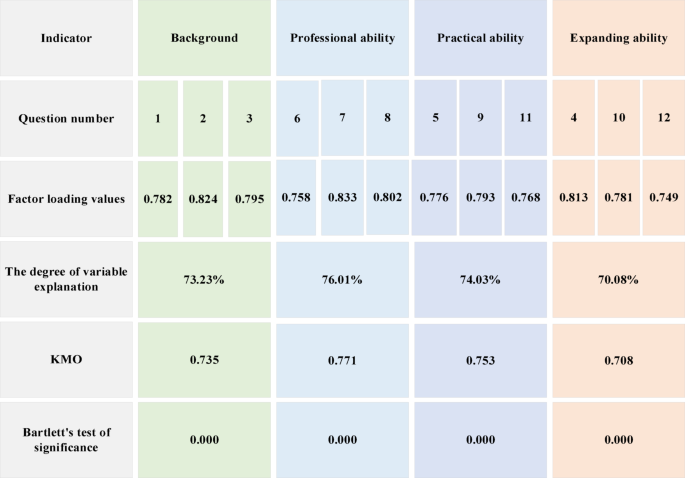
Validity analysis of the QS.
To construct a scientifically grounded and practically applicable evaluation index system, a four-phase process was adopted: literature review, expert interviews, pilot testing, and final revision.
-
1)
Literature Review: An extensive review of domestic and international literature was conducted, focusing on themes at the intersection of higher education, IEE, and music-based aesthetic education. From this body of research, core variables related to entrepreneurial competence were extracted—such as academic performance, competition experience, entrepreneurial engagement, and educational exposure.
-
2)
Expert Consultation: Two rounds of expert interviews were carried out, involving three university-level IEE instructors, two scholars in music education, and one entrepreneurship mentor. These consultations provided critical feedback on the relevance, structure, and wording of the preliminary indicator framework. Based on this input, several items were refined or reweighted to better align with the specificities of music-focused educational contexts.
-
3)
Pilot Testing: A pre-survey was conducted with 30 senior-year music students. This test assessed item clarity, logical consistency, discriminatory ability, and average completion time. Results indicated high comprehensibility and operability. Feedback from this stage led to further refinement, including the removal of redundant items and improvements to question phrasing.
-
4)
Finalization: The finalized evaluation index system comprises four first-level indicators—foundational competence, professional competence, practical competence, and extended competence—each containing three second-level indicators, forming a total of twelve input variables for the BPNN model. This index system integrates both theoretical constructs and real-world educational observations, ensuring high reliability, validity, and operational feasibility.
The final structure of the evaluation index system is illustrated in Fig. 6.
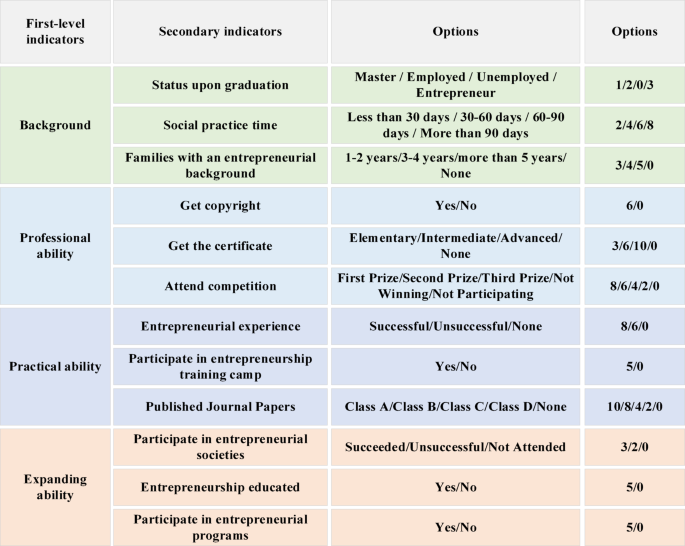
Evaluation indexes of music majors’ aesthetic course-oriented IEE.
In Fig. 6, each first-level indicator is subdivided into three secondary indicators. Each secondary indicator is associated with a set of questionnaire items, and different responses are assigned corresponding scores. These scores are then aggregated to form the input vectors for the neural network model.
link