Sarah Konwahahawi Rourke named CEO of NCIME
Article content
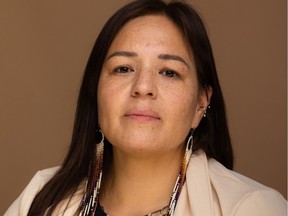
Transitioning to an independent non-profit organization this spring, the National Circle for Indigenous Medical Education (NCIME) has added Sarah Konwahahawi Rourke as its CEO.
Advertisement 2
Article content
From Akwesasne, Rourke said her approach to work is always grounded in teachings from her community. She is looking forward to continuing to engage with elders and traditional knowledge holders in her new role in order to bring invaluable tóta knowledge into decision-making and development.
Article content
Recommended Videos
Article content
Prior to taking on this role, Rourke served as the director of the Indigenous Health Professions Program (IHPP) in the Faculty of Medicine and Health Sciences at McGill University. She holds a master’s in educational leadership from St. Lawrence University and earned her doctorate in education in executive leadership with a focus on social justice from St. John Fisher College in 2021.
As CEO Rourke’s initial goal is to continue to strengthen NCIME‘s relationships with Canadian medical schools, national partners, and Indigenous communities.

Eastern Ontario Midday Roundup
Article content
Advertisement 3
Article content
“To focus on those relationships, the mentorships, the educational pathways, and the Indigenous knowledge that will support all that is so important,” she said. “We’re looking at the different ways of healing that are incorporated into medical education and health care across the country, whether it’s in a med school, training module, within clinics, ERs, or however that may be.”
Having Indigenous experts leading in health spaces ensures care is not only clinically sound but also culturally safe, said Rourke. Having served as a mentor to many Indigenous students in their medical residencies, Rourke said it’s so powerful to see this progress.
“We’re walking into spaces that weren’t normally meant for us and we’re showing the next generations so they can see themselves in these spaces,” she said. “We’re forging a path for them and showing them they can enter these spaces and thrive.”
Advertisement 4
Article content
Setting out protocols, and humanizing care and treatment of all people through education is extremely important to Rourke. Speaking about NCIME’s current initiatives, Rourke said the organization is collaborating with schools on curriculum development and research projects, as well as working to expand Indigenous medical mentorship opportunities.
NCIME has soft-launched an online scholar’s portal where Indigenous health educators and physicians can log in and discuss different topics, said Rourke. NCIME is also working to expand its research database.
Continuing to break down systemic barriers, especially in the medical system, and working to support medical students remains a priority of NCIME. Rourke said the organization works closely with several partners on this, including the Indigenous Physicians Association of Canada.
Advertisement 5
Article content
“We have a lot of really great things that are creating culturally safe environments,” she said.
Having a strong connection to local clinics and tribal councils within Akwesasne, Rourke said she is happy to see those community systems growing and serving people well. With these strong foundations in place, leaders can continue to look at what’s needed to enhance programs, as well as determine how to best support community members who want to pursue a medical education.
“We need to make sure we’re meeting our own definition of Indigenous success; I think that’s so important,” said Rourke. “Whether that means they’re learning their (traditional) language while they’re at school, or they’re able to attend every ceremony… there’s a different understanding of what that success looks like.”
Rourke is excited to continue to build community around Indigenous medical professionals through NCIME. Having recently attended an Indigenous Physicians Association of Canada event, and witnessing graduates and physicians interacting with one another, Rourke said it really is a circle of collective empowerment.
“Our ancestors taught us what it means to practise traditional medicine and we carry that with us as we practise western medicine,” said Rourke.
Article content
link