Brains, games, and VR frames: How UGA researchers are rewriting the rules of learning
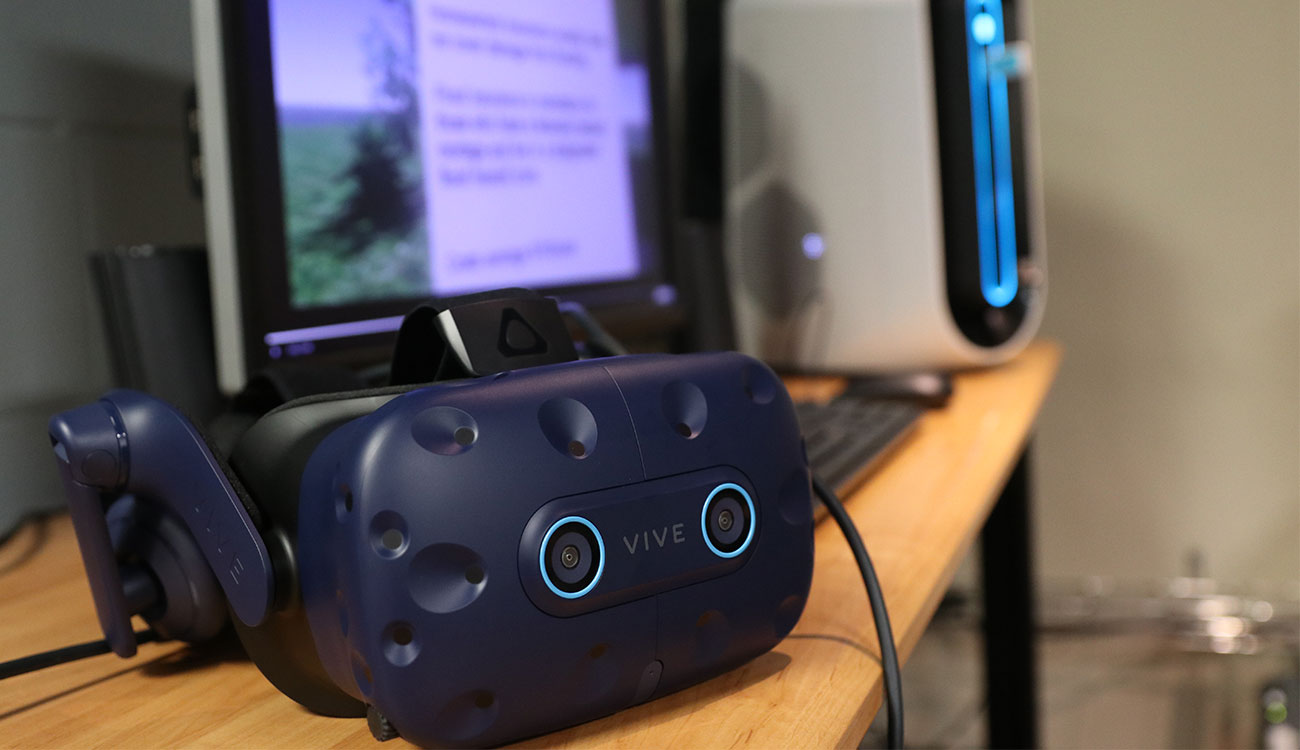
Social science theory has shown that threatening people doesn’t get them to change behavior. Illustrating the danger in a personally meaningful way, however, just might.
“You need give them the threat but also show them that sense of efficacy. How do they avoid the threat that they were just shown?” Ahn said. “You can now see, hear, and touch things that happen in the future because we can accelerate time and show you a future that is happening to you and no one else.”
Ahn used the specific example of a hurricane to demonstrate—in a very realistic way—the consequences of ignoring evacuation orders. Aimed at improving risk perception of coastal residents in Georgia and South Carolina, the two-part VR simulation first takes users into a coastal home where they feel safe, then shows what happens when a storm surge hits and flood waters rise over their head. Then the second part goes back to when there was time to evacuate, walking the viewer through procedures like learning to pack an evacuation bag, preparing their home by boarding up windows and securing potential flying debris, fueling their car, knowing where shelters are and when it’s safe to return home.
“Virtual reality is phenomenally strong in terms of building out that mental map, so when you come across the real deal, you at least have something to fall back on,” Ahn said.
What CACHE does well is bring its work to the community. Ahn is in the process of building a library of training simulations that deal with emergency preparedness.
Working closely with Georgia Sea Grant and Marine Extension at UGA and the South Carolina Sea Grant and National Hurricane Center, they’ve developed an emergency preparedness program called Weather the Storm. Anybody with access to a Meta Quest headset can download and “step into” the VR experience.
Ahn is working on similar simulations for wildfires—an increasing concern globally—and, in a project with Emory University, on dealing with hidden dangers of air quality issues associated with prescribed burns, a frequent practice in Georgia. Athens-Clarke County also reached out about creating a VR tornado experience.
“Disasters that really were not a part of our consideration for Georgia weather are now relevant and becoming more frequent, more intense,” Ahn said. “The emergency managers want to be ready. The whole idea of emergency preparedness is being ready before it hits, not after the fact.”
link